Table of Contents
ToggleBrawn GP F1 25 Introduction
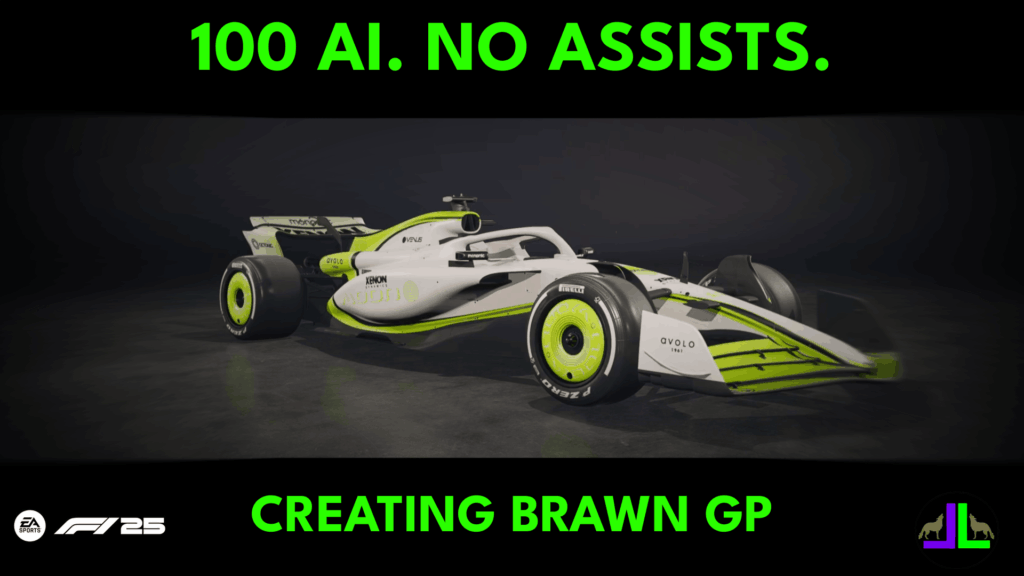
In this series, I’m rebuilding Brawn GP from scratch in F1 25 Career Mode, running 35% race distance at 100 AI difficulty with no assists.
This isn’t just a time trial hotlap series — it’s focused on realistic racing, tyre management, race pace, and championship progression across a full season.
Each week, I’ll cover every round with race breakdowns, setups, pole lap analysis, and track-specific tips. I’ll also share the hardware and camera settings I use for maximum consistency and realism.
Brawn GP Livery Creation + Realistic Camera Settings
In this first video, I create the Brawn GP-inspired livery from scratch and show my exact F1 25 camera settings for 100 AI Career Mode racing. These settings give better depth perception for braking zones, improved traction control, and a realistic cockpit view.
All the setups and tips in this series are designed to work for anyone playing F1 25 Career Mode, whether you’re using a controller, wheel, or hybrid setup. The key principles — tyre management, ERS usage, braking points, and corner entry lines — remain the same for every player.
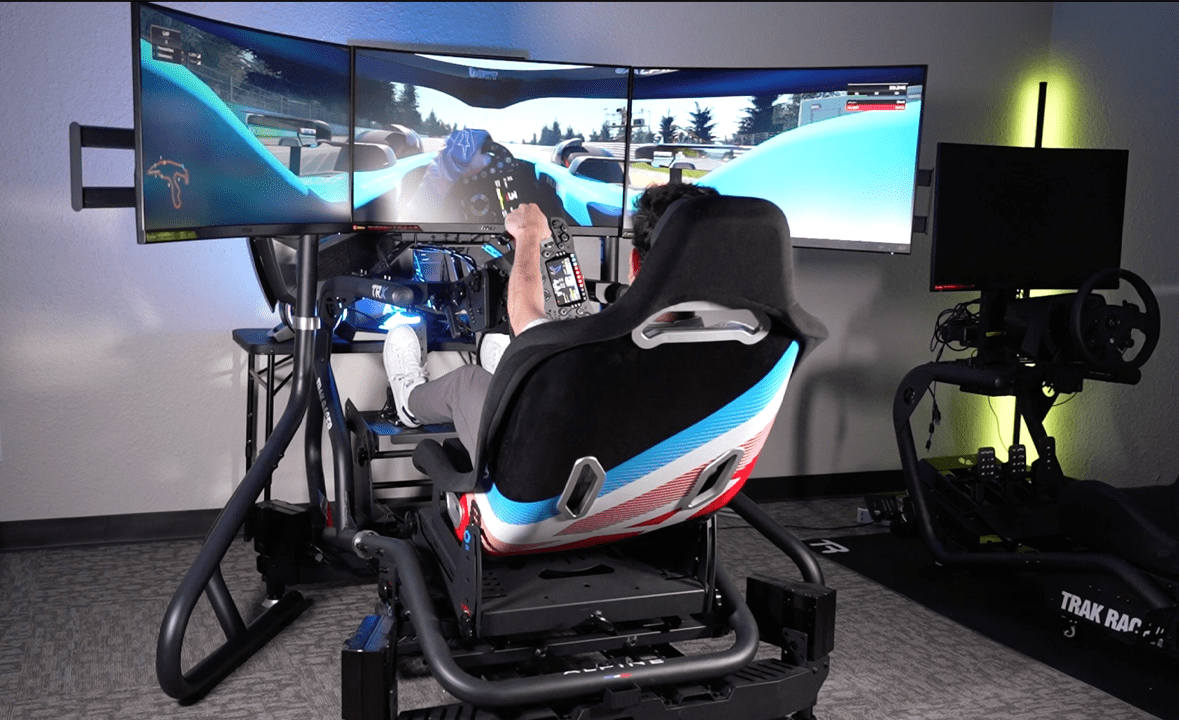
That said, using a wheel setup can improve feedback and realism. I run the Fanatec GT DD Pro wheel base, which gives precise control through heavy braking zones and high-speed corners. You can read my full review here.
Hardware Used for This Brawn GP Career Mode:
- Wheel Base: Fanatec GT DD Pro
- Pedals: Fanatec CSL Pedals
- Rig: SimLab GT Pro 1
Even if you’re on a controller, these setups still give you consistent lap times and better race performance — the wheel just adds extra realism and tactile feedback.
Round 1 – Australia Brawn GP Career Mode Setup & Qualifying Lap
Circuit Overview – Melbourne Grand Prix Circuit, Australia
- Location: Melbourne Grand Prix Circuit, Melbourne, Australia
- Length: 5.278 km (3.280 miles)
- Corners: 14
- DRS Zones: 4
- Layout: A mix of high-speed straights and technical corners, with sharp turns and quick direction changes. Key braking points make tyre management crucial in F1 25 35% races.
- Surface: Smooth asphalt with varying grip levels; track evolution and weather can affect lap consistency.
- Unique Feature: Set in picturesque Albert Park, the circuit combines public roads and permanent sections. Track evolution and unpredictable weather add extra challenge for realistic Career Mode racing.
Qualifying Lap Insight
For Australia, the lap demands a fine balance of downforce. I found that a strong front end combined with a lower rear wing works best, particularly for the straight between Turns 8 and 9.
Maintaining overall aero balance is crucial, as you can gain significant time carrying speed through the Turn 9–10 chicane. For a 35% race, a rear ride height of 48 is about as low as you can go — you’ll bottom out a little along the back straight, but the lap time benefits outweigh the loss.
At the start of the lap, carry plenty of speed through Turns 1 and 2 while watching track limits. Turns 9 and 10 are make-or-break corners; don’t run wide on exit, and a stable setup really pays off here.
Turn 14 can catch up to the rear, so apply throttle gradually. With this setup, running 100 AI with no assists in my Brawn GP career mode, I secured pole with a 1:17.266 — 0.441 seconds faster than the next car.
Want a full corner-by-corner breakdown of this lap? Check out my Australia lap guide
Hardware Used for This Brawn GP Career Mode:
I run the Fanatec GT DD Pro wheel base, which gives precise control through heavy braking zones and high-speed corners. You can read my full review here
- Wheel Base: Fanatec GT DD Pro
- Pedals: Fanatec CSL Pedals
- Rig: SimLab GT Pro 1
Even if you’re on a controller, these setups still provide consistent lap times and better overall performance — the wheel just adds extra tactile feedback and realism.
Round 2 – China Brawn GP Career Mode Setup & Qualifying Lap
Circuit Overview – Shanghai International Circuit, China
- Location: Shanghai International Circuit, Shanghai, China
- Length: 5.451 km (3.387 miles)
- Corners: 16
- DRS Zones: 2
- Layout: A modern circuit featuring a mix of long straights and tight technical corners, creating strong overtaking opportunities and rewarding balanced setups.
- Surface: Smooth, high-grip tarmac that offers good traction, though grip levels can drop in cooler conditions.
- Unique Feature: Famous for its long back straight leading into the Turn 14 hairpin, Shanghai also features sweeping high-speed corners early in the lap. The wide layout encourages overtaking and strategic racing.
Qualifying Lap Insight
China is a challenging circuit that can quickly destroy your tyres if the setup isn’t stable. The long right-handers through Turns 1–2 and Turns 12–13 put a lot of stress on the tyres, so maintaining stability is crucial over a 35% race distance. To help protect the tyres and maintain consistency, I opted for a higher-downforce setup, which also helps through the very technical Sector 2, where a lot of lap time can be gained or lost.
The trade-off with higher downforce is reduced top speed along the long back straight, which isn’t ideal for time trial runs. However, in My Career early in the season, the car is still largely underdeveloped and lacking natural downforce and grip, so this setup helps maximise the car’s potential while maintaining tyre life.
I’ve kept the on-throttle differential slightly more open to allow a smoother transition in power delivery, helping keep the rear stable through the long right-hand corners. Short-shifting through Turns 12 and 13 also helps prevent the rear tyres from overheating during longer stints.
With this setup, running 100 AI with no assists in my Brawn GP career mode, I secured pole with a 1:34.157, finishing 0.125 seconds faster than the next car.
Want a full corner-by-corner breakdown of this lap? Check out my China lap guide
Hardware Used for This Brawn GP Career Mode:
I run the Fanatec GT DD Pro wheel base, which gives precise control through heavy braking zones and high-speed corners. You can read my full review here
- Wheel Base: Fanatec GT DD Pro
- Pedals: Fanatec CSL Pedals
- Rig: SimLab GT Pro 1
Even if you’re on a controller, these setups still provide consistent lap times and better overall performance — the wheel just adds extra tactile feedback and realism.
Round 3 – Japan Brawn GP Setup & Qualifying Lap
Circuit Overview – Suzuka Circuit, Japan
- Location: Suzuka Circuit, Suzuka, Japan
- Length: 5.807 km (3.609 miles)
- Corners: 18
- DRS Zones: 1
- Layout: A technical figure-eight circuit with fast, flowing corners and significant elevation changes, rewarding precision and rhythm.
- Surface: Smooth, high-grip tarmac, though conditions can become slippery in wet weather, making tyre management important.
- Unique Feature: One of the only figure-eight circuits in motorsport, Suzuka combines iconic sections like the “S” Curves and 130R with tight technical corners, making it one of the most demanding tracks on the calendar.
Qualifying Lap Insight
Suzuka’s fast-flowing Sector 1 puts a lot of strain on the tyres, so maintaining a balanced and stable setup is key. I’ve kept the aero levels close together to improve turn-in through the esses while keeping the rear stable, which is crucial for carrying speed through this section.
With unpredictable weather often playing a role in Japan, I opted for a setup that works well in both dry and slightly damp conditions — a safer choice for Career Mode consistency. Overtaking can be difficult here due to the high-speed nature of the track, with Turn 1 being the main opportunity, although a move into the final chicane is always possible if you’re feeling confident.
With this setup, I just missed out on pole by +0.051, but I did manage to outqualify my teammate by nearly 0.700 seconds, which shows the consistency this setup provides.
Want a full corner-by-corner breakdown of this lap? Check out my Japan lap guide
Hardware Used for This Brawn GP Career Mode:
I run the Fanatec GT DD Pro wheel base, which gives precise control through heavy braking zones and high-speed corners. You can read my full review here
- Wheel Base: Fanatec GT DD Pro
- Pedals: Fanatec CSL Pedals
- Rig: SimLab GT Pro 1
Even if you’re on a controller, these setups still provide consistent lap times and better overall performance — the wheel just adds extra tactile feedback and realism.
Round 4 – Bahrain Brawn GP Setup & Qualifying Lap
Circuit Overview – Bahrain International Circuit, Bahrain
- Location: Bahrain International Circuit, Sakhir, Bahrain
- Length: 5.412 km (3.363 miles)
- Corners: 15
- DRS Zones: 3
- Layout: A modern circuit with a mix of long straights and technical corners, offering strong overtaking opportunities.
- Surface: Smooth, high-grip tarmac that supports consistent traction but increases tyre wear over longer stints.
- Unique Feature: The desert environment creates significant temperature fluctuations, which can heavily impact tyre wear and overall race performance.
Qualifying Lap Insight
Bahrain is a strong track with the right setup, offering good overtaking opportunities, but it can be tough on tyre wear if the car isn’t stable. I went for a medium-to-high downforce setup, running a higher front wing to improve turn-in through the faster, flowing sections.
The rear wing is more difficult to balance — the long main straight benefits from a lower rear wing, but the fast corners require more stability. I tend to prefer higher downforce setups, so I settled on a 32 rear wing, which gave me the confidence needed through the technical parts of the lap.
I also softened the suspension and increased the rear ride height, which helped over the kerbs and prevented bottoming out on the straights.
I just missed out on pole by +0.109, and there was definitely more time in the lap. However, this setup proved very stable over a full race distance, which paid off during the race.
Want a full corner-by-corner breakdown of this lap? Check out my Bahrain lap guide
Hardware Used for This Brawn GP Career Mode:
I run the Fanatec GT DD Pro wheel base, which gives precise control through heavy braking zones and high-speed corners. You can read my full review here
- Wheel Base: Fanatec GT DD Pro
- Pedals: Fanatec CSL Pedals
- Rig: SimLab GT Pro 1
Even if you’re on a controller, these setups still provide consistent lap times and better overall performance — the wheel just adds extra tactile feedback and realism.
Round 5 – Saudi Arabia Brawn GP Setup & Qualifying Lap
Circuit Overview – Jeddah Street Circuit, Saudi Arabia
- Location: Jeddah Street Circuit, Jeddah, Saudi Arabia
- Length: 6.174 km (3.836 miles)
- Corners: 27
- DRS Zones: 3
- Layout: A high-speed street circuit with fast, flowing sections and tight corners, rewarding precision and confidence.
- Surface: Smooth tarmac with varying grip levels, making consistency and car control crucial.
- Unique Feature: Set along the Red Sea, Jeddah is one of the fastest street circuits on the calendar, featuring blind high-speed corners and a demanding night race environment.
Qualifying Lap Insight
Jeddah is a technical masterclass in high-speed, flowing corners — one small mistake can completely ruin a lap. The circuit demands full commitment, especially through the blind sections, so having a setup that inspires confidence is key.
I’ve gone with a larger offset between front and rear wing, allowing the car to turn in aggressively while still maintaining strong top speed with a lower rear wing. Because of the reduced rear downforce, I also took a couple of clicks out of the rear toe to help keep the car stable through the faster sections.
Overall, this setup felt very stable and quick over a race distance, which is crucial for consistency in Career Mode. I was actually on for a very strong lap — setting two purple sectors — but got blocked in the final sector, which completely ruined the run. That’s part of the experience, though, and this series is all about running a realistic Brawn GP Career Mode, adapting to situations just like in real racing.
Want a full corner-by-corner breakdown of this lap? Check out my Saudi Arabia lap guide
Hardware Used for This Brawn GP Career Mode:
I run the Fanatec GT DD Pro wheel base, which gives precise control through heavy braking zones and high-speed corners. You can read my full review here
- Wheel Base: Fanatec GT DD Pro
- Pedals: Fanatec CSL Pedals
- Rig: SimLab GT Pro 1
Even if you’re on a controller, these setups still provide consistent lap times and better overall performance — the wheel just adds extra tactile feedback and realism.
Round 6 – Miami Brawn GP Setup & Qualifying Lap
Circuit Overview – Miami International Autodrome, USA
- Location: Miami, Florida, USA
- Length: 5.412 km (3.363 miles)
- Corners: 19
- DRS Zones: 3
- Layout: A modern street circuit combining long straights with technical sections and tight chicanes, requiring a balance between speed and precision.
- Surface: Smooth asphalt with evolving grip levels throughout the weekend.
- Unique Feature: The circuit winds around the Hard Rock Stadium, featuring a technical stadium section and the tight Turn 14–15 chicane that demands precision and control.
Qualifying Lap Insight
Miami is a modern street circuit that mixes fast-flowing sections with long straights, making it tricky to find the right balance between straight-line speed and cornering precision. I’ve gone with a lower downforce setup to maximise speed on the straights, while keeping the aero fairly balanced to maintain stability through the technical sections.
The kerbs at the beginning of the lap can easily unsettle the car, so I softened the front suspension to help ride them more effectively and maintain momentum. Braking into Turn 7 can be difficult due to the lack of clear reference points, and getting a strong exit out of Turn 8 is crucial as it leads onto the first long straight.
The stadium section is one of the most enjoyable parts of the lap, and I can often gain time here, usually pushing into a purple sector. I did lose some time running slightly wide at Turn 17, where traction on exit is critical.
To support the lower downforce setup, I added a click of front and rear toe for stability and ran higher tyre pressures to help with temperatures and straight-line performance.
I managed to qualify P2, and with my main goal being to beat my teammate, I was happy to finish around 0.650 seconds ahead, which is a solid result at this stage of the Brawn GP Career Mode.
Want a full corner-by-corner breakdown of this lap? Check out my Miami Lap Guide
Hardware Used for This Brawn GP Career Mode:
I run the Fanatec GT DD Pro wheel base, which gives precise control through heavy braking zones and high-speed corners. You can read my full review here
- Wheel Base: Fanatec GT DD Pro
- Pedals: Fanatec CSL Pedals
- Rig: SimLab GT Pro 1
Even if you’re on a controller, these setups still provide consistent lap times and better overall performance — the wheel just adds extra tactile feedback and realism.
Round 7 – Imola Brawn GP Setup & Qualifying Lap
Circuit Overview – Imola, Italy
- Location: Imola, Emilia-Romagna, Italy
- Length: 4.909 km (3.050 miles)
- Corners: 19
- DRS Zones: 1
- Layout: A fast, flowing and technical circuit with tight chicanes and significant elevation changes.
- Surface: Smooth asphalt with high grip, but demanding due to kerbs and direction changes.
- Unique Feature: Runs anti-clockwise, making it physically demanding and rhythm-based for drivers.
Qualifying Lap Insight
Imola is one of the classic old-school circuits — fast, flowing, and highly technical, which makes it incredibly rewarding when the setup is dialled in correctly.
Through Turn 2 and into Turn 3, you can carry a lot of kerb and maintain momentum by staying aggressive but controlled through the direction changes, keeping the car tight on exit. The 5–6 chicane is more delicate — downshift cleanly and avoid overusing the exit kerb, as I experienced a snap of oversteer here, which cost a small amount of time.
Sector 2 is all about rhythm and flow. It’s a sequence of fast corners where stability is key, and I did get a little throttle-happy, which led to a couple of minor oversteer moments. This is something I may adjust in the setup with a slightly more rear wing or a small increase in ride height to improve rear stability.
The 14–15 chicane is one of the most important parts of the lap — if you get the entry right, you can gain significant time, but track limits are very easy to violate here. The final sector requires patience, especially in the downhill braking zone at Turn 17, where front lock-ups and gravel traps are common.
Despite a few small mistakes, I was happy with the lap, finishing just over half a second clear of the AI at 100 difficulty, securing pole position. There is still time on the table, particularly through improving rear stability, but overall, the setup felt strong and consistent.
This was a high downforce setup, which suits Imola’s technical nature. The track is bumpy with aggressive kerbs, so I raised the ride height slightly to avoid bottoming out and ran stiffer anti-roll bars to help with rapid direction changes. Tyre wear felt controlled, and tyre pressures kept the car in a stable operating window throughout the lap.
Track position is absolutely critical here, as overtaking is extremely difficult.
Want a full corner-by-corner breakdown of this lap? Check out my Imola Lap Guide
Hardware Used for This Brawn GP Career Mode:
I run the Fanatec GT DD Pro wheel base, which gives precise control through heavy braking zones and high-speed corners. You can read my full review here
- Wheel Base: Fanatec GT DD Pro
- Pedals: Fanatec CSL Pedals
- Rig: SimLab GT Pro 1
Even if you’re on a controller, these setups still provide consistent lap times and better overall performance — the wheel just adds extra tactile feedback and realism.
Round 8 – Monaco Brawn GP Setup & Qualifying Lap
Circuit Overview – Monaco Grand Prix, Monte Carlo
- Location: Monte Carlo, Monaco
- Length: 3.337 km (2.074 miles)
- Corners: 19
- DRS Zones: 1
- Layout: A legendary and narrow street circuit with tight corners, slow-speed sections, and almost no overtaking opportunities.
- Surface: Bumpy street surface with low grip, especially in warmer conditions, making precision and tyre control essential.
- Unique Feature: One of the most iconic circuits in motorsport, featuring Casino Square, the Sainte-Dévote hairpin, the Tunnel, and the Swimming Pool complex. Monaco is as much about survival and precision as it is about speed, with qualifying often defining the race result.
Qualifying Lap Insight
Monaco is the most technical circuit on the calendar, where the barriers feel extremely close in cockpit view, and even the smallest mistake can end the lap instantly. Precision and patience are far more important than outright aggression.
Turn 1 is critical — carry speed through the corner and up the hill, using the kerb carefully but avoiding understeer into the barrier. A strong exit here can effectively define the rest of the lap. Through the early section, it’s important to use the path of least resistance and avoid overdriving the car, as Monaco rewards smooth and controlled inputs.
After Turn 4, there is a small bump where the car can become unsettled. While it can be ridden over in F1 25, it can still induce slight oversteer if you’re too aggressive. Through the hairpin, staying tight to the wall on entry is key, but avoiding the heavy inside kerb is important to prevent understeer or floor damage on exit.
The tunnel section requires committed throttle application, with energy deployment helping maximise speed on exit. It’s important to stay central on the track here, as the right-hand side is bumpier and can cost valuable time.
The braking zone into the chicane is downhill and extremely easy to lock up in, so controlled braking is essential. The Swimming Pool section is one of the most demanding parts of the lap — entry positioning is crucial, as missing the apex can force you wide into the barriers or invalidate the lap on the sausage kerbs.
The final corners through Anthony Noghes require precision on exit, as the rear can easily step out over the kerb.
Despite losing a couple of tenths through the final sector, I managed to beat the AI by nearly one full second, which was a huge result, and I also outqualified my teammate by 1.8 seconds, showing just how strong this setup is when hooked up.
Monaco requires maximum downforce to maintain stability through low-speed corners. I’ve also used firm anti-roll bars to improve direction change response, while keeping tyre pressures low to maximise traction and keep temperatures stable throughout the lap.
Track position is everything here, just like in real life, as overtaking is almost impossible. This setup prioritises consistency and race stability over outright top speed, but still delivers strong qualifying performance.
Want a full corner-by-corner breakdown of this lap? Check out my Monaco Lap Guide
Hardware Used for This Brawn GP Career Mode:
I run the Fanatec GT DD Pro wheel base, which gives precise control through heavy braking zones and high-speed corners. You can read my full review here
- Wheel Base: Fanatec GT DD Pro
- Pedals: Fanatec CSL Pedals
- Rig: SimLab GT Pro 1
Even if you’re on a controller, these setups still provide consistent lap times and better overall performance — the wheel just adds extra tactile feedback and realism.
Round 9 – Spain Brawn GP Setup & Qualifying Lap
Circuit Overview – Circuit de Barcelona-Catalunya, Spain
- Location: Barcelona, Spain
- Length: 4.675 km (2.905 miles)
- Corners: 14
- DRS Zones: 2
- Layout: A balanced circuit featuring long straights, high-speed corners, and technical sections that test both car setup and driver consistency.
- Surface: Smooth asphalt with consistent grip, though tyre wear can become a factor over longer stints.
- Unique Feature: The long sweeping Turn 3 and high-speed Turn 9 are critical for lap time, while the technical final sector demands precision and strong traction.
Setup Philosophy – Inspired by Adrian Newey
For Spain, I experimented with a slightly different setup philosophy, focusing on keeping the car as stable and predictable as possible through long, loaded corners. This approach is inspired by ideas from How to Build a Car, particularly around how ground effect cars perform best when the platform remains consistent.
Rather than following the typical esports trend of running a very soft rear and stiff front, I moved towards a more balanced suspension setup — slightly stiffening the rear while softening the front. The goal is to reduce how much the car “pivots” under load and instead keep it more level through corners, maintaining aerodynamic stability.
This made the car feel more predictable through the long corners in Spain, while also helping with tyre consistency over a race distance. It may not always produce the absolute fastest qualifying lap, but it improves stability and control, which is key in Career Mode racing.
👉 You can check out the book here → How to Build a Car: The Autobiography of the World’s Greatest Formula 1 Designer
Qualifying Lap Insight
Using this more balanced and stability-focused setup, Spain becomes a very consistent and enjoyable circuit to drive. The car feels more predictable through the long, flowing corners, especially in Sector 1, where tyre management is critical.
Through Turn 1, braking just after the 100m board and using the outside kerb opens up the corner nicely. Turn 3 is all about smooth steering inputs and maintaining momentum, as this corner heavily punishes tyre wear if overdriven.
The run through Turn 5 into Turn 7 requires a clean line to maximise straight-line speed, followed by precise braking into the Turn 7–8 chicane. Avoiding the sausage kerbs here is important, as they can easily unsettle the car.
Turn 9 is flat in qualifying trim, but track limits and exit stability are key, especially as tyre temperatures rise. The final sector is where laps are often won or lost — Turn 13 is a blind entry, so it’s more about rhythm and muscle memory, while Turn 14 requires a clean exit without running wide onto the kerb.
Overall, I managed to beat my teammate and felt the car was very strong over a longer run. While there is still a bit more performance available in qualifying trim, this setup is clearly more focused on race stability and tyre preservation, which suits Career Mode progression.
Want a full corner-by-corner breakdown of this lap? Check out my Spain Lap Guide
Hardware Used for This Brawn GP Career Mode:
I run the Fanatec GT DD Pro wheel base, which gives precise control through heavy braking zones and high-speed corners. You can read my full review here
- Wheel Base: Fanatec GT DD Pro
- Pedals: Fanatec CSL Pedals
- Rig: SimLab GT Pro 1
Even if you’re on a controller, these setups still provide consistent lap times and better overall performance — the wheel just adds extra tactile feedback and realism.
Round 10 – Canada Brawn GP Setup & Mixed Conditions Qualifying
Circuit Overview – Circuit Gilles Villeneuve, Canada
- Location: Montreal, Canada
- Length: 4.361 km (2.710 miles)
- Corners: 14
- DRS Zones: 3
- Layout: A high-speed circuit combining long straights, heavy braking zones, and tight chicanes.
- Surface: Smooth asphalt, but grip levels can vary significantly in wet conditions.
- Unique Feature: The infamous “Wall of Champions” at the final chicane exit, which has caught out many top drivers over the years.
Qualifying Insight – Mixed Conditions Setup
For this round, I had to run a slightly compromised setup due to the changing conditions in Montreal. This is something real F1 teams constantly face here — Q1 was dry, Q3 was wet, and the race was also expected to shift conditions throughout. Because of that, I opted for a setup that could remain stable and predictable in both wet and dry sessions.
In wet conditions, especially, kerb usage becomes a major factor. They are extremely slippery in the rain, and even a small mistake can lead to loss of control or damage. The focus becomes smooth inputs, controlled throttle application, and avoiding aggressive kerb riding.
Through Turn 1, braking cleanly and avoiding the inside kerb is essential. The car should be kept central through Turn 2, allowing it to rotate naturally without aggressive steering input. In the next section, you can open the track up and carry speed through the chicane by using controlled kerb usage, but understeer must be avoided as it can easily put you into the wall on exit.
Turns 6 and 7 are all about patience in the wet — you want to stay tight to the kerb without mounting it, and focus on a clean exit as this sets up the next straight. The Turn 8–9 chicane is one of the most technical parts of the lap, requiring precision to avoid invalidation or excessive kerb usage that can unsettle the car.
Into the hairpin at Turn 10, it’s better to prioritise exit speed over perfect apexes. Letting the car roll through and short-shifting helps maximise traction. From there, positioning is key heading into the Wall of Champions — you want to use kerb on entry, but avoid bottoming out, as that can instantly end the lap.
In qualifying trim, I managed a strong performance in both conditions, with the wet lap being particularly challenging but rewarding. The setup felt stable across both sessions, which was the main goal — even if it meant sacrificing a small amount of outright peak pace.
Setup Direction
This setup was designed as a compromise for variable conditions, prioritising stability, kerb management, and traction over pure qualifying performance. It proved especially effective in the wet, where consistency and control matter more than outright speed.
Want a full corner-by-corner breakdown of this lap? Check out my Canada Lap Guide
Hardware Used for This Brawn GP Career Mode:
I run the Fanatec GT DD Pro wheel base, which gives precise control through heavy braking zones and high-speed corners. You can read my full review here
- Wheel Base: Fanatec GT DD Pro
- Pedals: Fanatec CSL Pedals
- Rig: SimLab GT Pro 1
Even if you’re on a controller, these setups still provide consistent lap times and better overall performance — the wheel just adds extra tactile feedback and realism.
Dry Conditions Reference Lap
Dry Lap Key Points
- Strong overall lap despite a compromised mixed-conditions setup
- Set the 2nd fastest time in Q1, showing solid baseline pace
- Dry conditions allow more kerb usage, but over-committing still causes instability
- The biggest time gain comes from being more aggressive through the final chicane
- Left a small margin at the Wall of Champions, with additional time still available
- The setup felt stable, but there is still clear lap time to be found with more precision
Canada is one of my favourite circuits on the calendar and is always a great track to race at. For Career Mode, especially with dynamic weather, it’s important to run a setup that can perform in both wet and dry conditions, even if it means sacrificing a small amount of outright pace.
If you were running a pure time trial setup, you could optimise further by reducing the rear wing, lowering the ride height, and adjusting tyre pressures depending on track conditions and temperature to maximise peak performance.
Round 11 – Austria Brawn GP Setup & Qualifying Lap
Circuit Overview – Red Bull Ring, Austria
- Location: Spielberg, Austria
- Length: 4.318 km (2.688 miles)
- Corners: 10
- DRS Zones: 3
- Layout: A short but high-speed circuit featuring long straights, heavy braking zones, and flowing uphill/downhill sections.
- Surface: Smooth asphalt with good grip, though tyre management can still be challenging due to the high-speed nature of the circuit.
- Unique Feature: Fast-flowing Sector 2 combined with dramatic elevation changes and the scenic Styrian Alps backdrop.
Qualifying Lap Insight
Austria is a fast, flowing circuit that rewards commitment and precision, and I was extremely happy with how this setup performed here. It’s one of those tracks where confidence really pays off, especially through the high-speed sections.
Through Turn 1, it’s important to maximise track width and use the red and white kerb to open up the corner. Braking late into fourth gear and carrying kerb on entry helps rotate the car, but you must avoid running wide on exit as the sausage kerb can cause bottoming and potential underfloor damage. A strong exit here is crucial as it leads onto the longest straight on the circuit.
Turn 3 requires careful braking, especially as the brakes are still cold. Lock-ups are common here, so shifting down to second gear helps rotate the car before short-shifting to maximise traction onto the next straight.
Through Turn 4, avoid mounting too much kerb — just the left wheels should be enough to maintain stability. Downhill braking into Turn 5 requires early braking, as the car can easily understeer wide due to the track falling away.
Turn 6 is all about controlled aggression — use the kerb on entry, but avoid the inside kerb as it can unsettle the car. Exit stability is important here to avoid running wide into the gravel.
Turns 7 and 8 flow together and are key for building rhythm, using kerb to straighten the car before setting up Turn 9. This corner requires precision — drop to seventh gear, hit the apex cleanly, and avoid running wide on exit.
Turn 10 is the final key corner — brake in, aim close to the wall, and let the speed carry you through. It’s one of those corners where commitment really pays off, as long as you stay within track limits on exit.
Overall, I managed to take pole position by over a second, a strong result that showed just how well this setup worked throughout the lap.
Want a full corner-by-corner breakdown of this lap? Check out my Austria Lap Guide
Hardware Used for This Brawn GP Career Mode:
I run the Fanatec GT DD Pro wheel base, which gives precise control through heavy braking zones and high-speed corners. You can read my full review here
- Wheel Base: Fanatec GT DD Pro
- Pedals: Fanatec CSL Pedals
- Rig: SimLab GT Pro 1
Even if you’re on a controller, these setups still provide consistent lap times and better overall performance — the wheel just adds extra tactile feedback and realism.
Round 12 – Silverstone Brawn GP Setup & Qualifying Lap
Circuit Overview – Silverstone Circuit, Great Britain
- Location: Silverstone, Great Britain
- Length: 5.891 km (3.660 miles)
- Corners: 18
- DRS Zones: 2
- Layout: A high-speed circuit featuring iconic corners like Maggotts, Becketts, and Stowe, with a mix of flowing sections and technical braking zones.
- Surface: Smooth tarmac, though grip levels can evolve throughout the weekend, especially in changing conditions.
- Unique Feature: The Maggotts and Becketts complex — one of the most demanding high-speed sequences on the calendar, requiring precision, rhythm, and confidence.
Qualifying Lap Insight
Silverstone is one of my favourite circuits to drive, and it really rewards a car that feels stable through high-speed direction changes. Confidence is everything here, especially through the fast, flowing sections.
Turn 1 can be taken at high speed — dropping to seventh gear helps maintain momentum while keeping the car stable on exit. Hugging the apex into Turn 2 sets the car up nicely for the braking zone into Turn 3, where avoiding the inside sausage kerb is key to maintaining control.
Through Turns 4 and 5, positioning is important — moving over to the right allows a better switchback line, helping maximise exit speed onto the following straight. In Turn 6, late braking and carrying speed through the apex is important, while Turn 7 benefits from a smooth line and a short shift on exit to keep the rear stable.
Copse is one of the defining corners of the lap — taking it in seventh gear helps maintain stability, but it’s very easy to run wide and invalidate the lap if you carry too much speed.
The Maggotts and Becketts sequence is all about rhythm. You need to use all available apexes and flow the car left-right-left-right, gradually dropping gears as speed comes off. Throttle modulation is key here, and getting a strong exit is crucial to maximise speed down the Hangar Straight.
Braking into Vale (Turn 16) should be done just as the red-and-white kerb begins, avoiding the inside sausage kerb. From there, positioning the car correctly sets up the final two corners, where short shifting helps maintain rear stability and avoid traction loss.
Overall, this is a circuit where the setup needs to inspire confidence at high speed, and when everything comes together, it’s one of the most rewarding laps on the calendar.
Want a full corner-by-corner breakdown of this lap? Check out my Great Britain Lap Guide
Hardware Used for This Brawn GP Career Mode:
I run the Fanatec GT DD Pro wheel base, which gives precise control through heavy braking zones and high-speed corners. You can read my full review here
- Wheel Base: Fanatec GT DD Pro
- Pedals: Fanatec CSL Pedals
- Rig: SimLab GT Pro 1
Even if you’re on a controller, these setups still provide consistent lap times and better overall performance — the wheel just adds extra tactile feedback and realism.
Round 13 – Belgium Brawn GP Setup & Qualifying Lap
Circuit Overview – Circuit de Spa-Francorchamps, Belgium
- Location: Spa-Francorchamps, Belgium
- Length: 7.004 km (4.352 miles)
- Corners: 19
- DRS Zones: 2
- Layout: A long, high-speed circuit with sweeping corners, elevation changes, and iconic sections.
- Surface: Smooth asphalt with grip levels that can vary, especially with changing weather.
- Unique Feature: Famous for unpredictable weather and legendary corners like Eau Rouge, Raidillon, and Blanchimont.
Qualifying Lap Insight
Spa is a circuit where confidence and stability are everything, especially with its unpredictable conditions. Having a setup that feels planted at high speed is key to unlocking lap time here.
Into Turn 1, braking late and aiming towards the wall works well thanks to the natural camber, which helps rotate the car. A clean exit is crucial as it sets you up for the run down to Eau Rouge and Raidillon.
This section is taken flat out, using the kerbs but being careful not to take too much at the crest, as it’s easy to invalidate the lap with track limits. From there, it’s full commitment onto the Kemmel Straight — deploying battery here is key to maximising straight-line speed in qualifying.
Turns 10 and 11 effectively act as one long, fast left-hander. A slight lift or drop to seventh gear helps maintain control while still carrying high speed through the section. Precision on entry and exit is important to maintain momentum.
Through the middle sector, it’s important to avoid small mistakes — particularly at Turn 14, where it’s very easy to dip a wheel into the gravel on exit if you run wide. From there, you can carry strong speed through the following flat-out section by taking the cleanest possible racing line.
Into the final sector, braking hard into Turn 18 and using the kerb helps rotate the car, but you need to be ready for potential oversteer when flicking the car back across. Maintaining control through here is key to finishing the lap cleanly.
Overall, I managed to set a lap 1.3 seconds faster than the AI on 100 difficulty, showing just how strong this setup was — combining stability with strong straight-line speed.
Want a full corner-by-corner breakdown of this lap? Check out my Belgium Lap Guide
Hardware Used for This Brawn GP Career Mode:
I run the Fanatec GT DD Pro wheel base, which gives precise control through heavy braking zones and high-speed corners. You can read my full review here
- Wheel Base: Fanatec GT DD Pro
- Pedals: Fanatec CSL Pedals
- Rig: SimLab GT Pro 1
Even if you’re on a controller, these setups still provide consistent lap times and better overall performance — the wheel just adds extra tactile feedback and realism.
Round 14 – Hungary Brawn GP Setup & Qualifying Lap
Circuit Overview – Hungaroring, Hungary
- Location: Budapest, Hungary
- Length: 4.381 km (2.722 miles)
- Corners: 14
- DRS Zones: 2
- Layout: A tight and technical circuit with constant direction changes and limited overtaking opportunities.
- Surface: Smooth asphalt with medium grip, placing high demand on tyre management.
- Unique Feature: Often referred to as “Monaco without the walls,” the Hungaroring is a rhythm-based circuit where precision and consistency are key.
Qualifying Lap Insight
Hungary is one of the most challenging tracks on the calendar and not one of my strongest circuits. It’s extremely technical, with tyres taking a lot of punishment over a lap, so having a stable setup with strong front-end bite is essential — especially through the fast-flowing Sector 2.
I only just managed to start my final lap at the end of qualifying, which added a bit of pressure to deliver.
Turn 1 is the main overtaking opportunity and is quite open, leading into the second DRS zone. Through Turn 2, the track falls away to the left, helping rotate the car, which then sets you up for the uphill run into Turn 4. This is a crucial corner — braking at the black box, dropping a couple of gears, and mounting the apex kerb works well, but running wide will easily invalidate the lap.
Turn 5 requires patience — get close to the apex but avoid the inside concrete kerb, as it can easily spin the car. Into the Turn 6–7 chicane, you can take plenty of kerb, but you need to avoid the sausage kerbs to prevent unsettling the car or causing damage.
Through the middle sector, it’s important to manage rhythm — sacrificing a bit of speed in Turn 8 helps maximise the exit of Turn 9. Turn 11 is taken flat, but track limits are very tight, so precision is key.
By the final sector, tyre temperatures are extremely high, making traction difficult. Turn 13 requires a late apex, allowing the car to rotate before carefully applying throttle. The final corner is all about exit speed — hugging the inside and getting on the power early without unsettling the car over the kerb is crucial for the run to the line.
Despite a small mistake in Sector 2 heading into the Turn 6–7 chicane, I was still able to qualify P3, missing pole by just 0.101 seconds. Given this isn’t one of my strongest tracks, I was happy with the result.
This Career Mode series is all about creating an immersive experience, which is why I leave in small mistakes — just like in real F1, even the best drivers don’t get every lap perfect.
Want a full corner-by-corner breakdown of this lap? Check out my Hungary Lap Guide
Hardware Used for This Brawn GP Career Mode:
I run the Fanatec GT DD Pro wheel base, which gives precise control through heavy braking zones and high-speed corners. You can read my full review here
- Wheel Base: Fanatec GT DD Pro
- Pedals: Fanatec CSL Pedals
- Rig: SimLab GT Pro 1
Even if you’re on a controller, these setups still provide consistent lap times and better overall performance — the wheel just adds extra tactile feedback and realism.
Affiliate Disclaimer
Some of the links in this post are affiliate links, including links to Amazon. This means I may earn a small commission if you purchase through these links, at no extra cost to you.
This helps support the channel and allows me to continue creating free F1 25 Career Mode content, setups, and lap guides.
I only recommend products I personally use or genuinely believe will improve your sim racing experience.